

Acquiring fraud detection with methodological discipline, economic realism, and governance by design.
CyberAntifraud is an applied doctoral research hub at NOVA IMS focused on fraud detection in merchant acquiring. It sits at the intersection of fraud analytics, deep learning, temporal evaluation, and operational governance. The central objective is to improve fraud capture while reducing unnecessary customer friction, using methods that remain reproducible, cost aware, and compatible with real world control environments.
Temporal Integrity Gate
time awareCost and Friction Engine
net benefitGovernance Trace Layer
audit readyData disclosure policy. No sensitive operational data is published. Public examples rely on synthetic or anonymised aggregates.
Offer for fraud teams
What this hub can provide
- Time aware evaluation protocol, rolling windows, leakage controls, and reproducible reporting.
- Cost model and threshold policy based on expected net benefit under operational constraints.
- Benchmarking logic where strong baselines come first and deep learning is justified only when it wins under temporal backtests.
- Governance pack with model cards, release gates, monitoring plan, rollback triggers, and audit evidence.
Practical scope. Merchant acquiring, card present and e-commerce, designed for regulated environments.
Use modes
- Research facing material for reviewers, supervisors, and academic collaborators.
- Method facing material for fraud teams that need defensible evaluation and threshold policy.
- Translation layer between academic standards and real world fraud operations.
- Public reference point for protocols, templates, and decision logic that can be scrutinised without disclosing sensitive data.
The site is not a rule repository and not a vulnerability guide. It exists to document method, evidence, and limits.
Credibility signals
PhD research at NOVA IMS Academic supervision Acquiring domain focus Temporal validation Cost sensitive evaluation Reproducible artefacts Audit ready governanceResearch focus
Research questions
- How can false positives be reduced without sacrificing fraud capture under strict temporal validation?
- How should fraud models be evaluated when the target is expected net benefit rather than generic accuracy?
- How can drift be detected and controlled in acquiring, where merchant behaviour and attacker behaviour evolve continuously?
- How can governance, auditability, and human oversight be operationalised without undermining deployment realism?
Scope. Merchant context, behavioural signals, cost aware decision policies, and deployment compatible evaluation.
Facts and figures
Core outputs on this hub
Evaluation protocol Cost model note Model card template Reviewer pack Operational explainability Disclosure boundariesResearch foundation
Academic supervision and research grounding
CyberAntifraud is grounded in doctoral research conducted at NOVA IMS, Universidade Nova de Lisboa, under the academic supervision of Professor Vítor Santos. This foundation reinforces the methodological orientation of the project, including clear problem framing, reproducible evaluation, time aware validation, and explicit attention to operational and governance constraints.
The site is authored and maintained by Paulo Saramago as an independent public research hub. Its purpose is to translate doctoral work into structured public artefacts that are scientifically credible, operationally relevant, and suitable for discussion with both academic and industry audiences.
Supervisor profile
Professor: Vítor Santos
Role: Associate Professor
Institution: NOVA IMS, Universidade Nova de Lisboa
Positioning statement
CyberAntifraud is positioned as an applied research and methods hub for acquiring fraud detection. It is not a generic AI commentary site. Its emphasis is on methodological clarity, temporal validity, cost sensitive evaluation, reproducibility, and governance readiness in regulated decision environments.
Protocol and templates
Evaluation protocol
Blocked time series validation, rolling windows, leakage control, stability tracking, and release gates designed to approximate production reality.
PDF: Download
Cost model note
False positives and false negatives translated into comparable economic terms so threshold decisions can be challenged, defended, and governed.
PDF: Download
Model card template
Audit ready documentation for each model release, including data windows, metrics, drift checks, rollback criteria, and sign off evidence.
PDF: Download
Why these artefacts matter
The protocol pack exists to make claims defensible. The goal is not only to improve metrics, but to make evaluation honest, threshold choices explicit, and deployment decisions compatible with audit and operational reality.
Institutional and professional references
These references frame the academic and professional context around the work. They are not presented as endorsements.


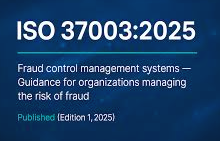

Relevance. NOVA IMS provides the academic setting. ISO 37003:2025 is relevant as a fraud control management reference. ACFE remains an important professional anti fraud community and knowledge source.
Papers and outputs
| Work | Status | Focus | Links |
|---|---|---|---|
| Survey Deep learning for acquiring fraud detection | In progress | SLR, metrics, temporal validation, robustness, governance | Preprint coming soon |
| Methods Temporal validation and cost model | Planned | Protocol, cost curves, drift control, baselines, decision thresholds | Draft coming soon |
| Results Models versus baselines in acquiring context | Planned | Model families, operational trade offs, drift, governance | Draft coming soon |
| Reviewer pack Private assessment page | Available | Research scope, protocol, governance stance, limitations, and deliverables | Open |
Fast entry point. Start with the protocol PDFs, then the reviewer pack, then the public positioning on this page.
Contact
Paulo Saramago • Lisbon, Portugal
Academic email. psaramago@novaims.unl.pt
LinkedIn. linkedin.com/in/saramago
Alternative email. psaramago@gmail.com
For academic collaboration or applied discussion, include the acquiring context, current validation split strategy, main pain point, and any key operational or audit constraints.